Common fibular (peroneal) nerve at the fibular neck
The common fibular nerve, also called the common peroneal nerve, wraps around the fibular neck with little protection and enters beneath fibularis longus. It is the most common compression neuropathy of the lower limb. This page shows that relationship in 3D.
Anatomy of the passage
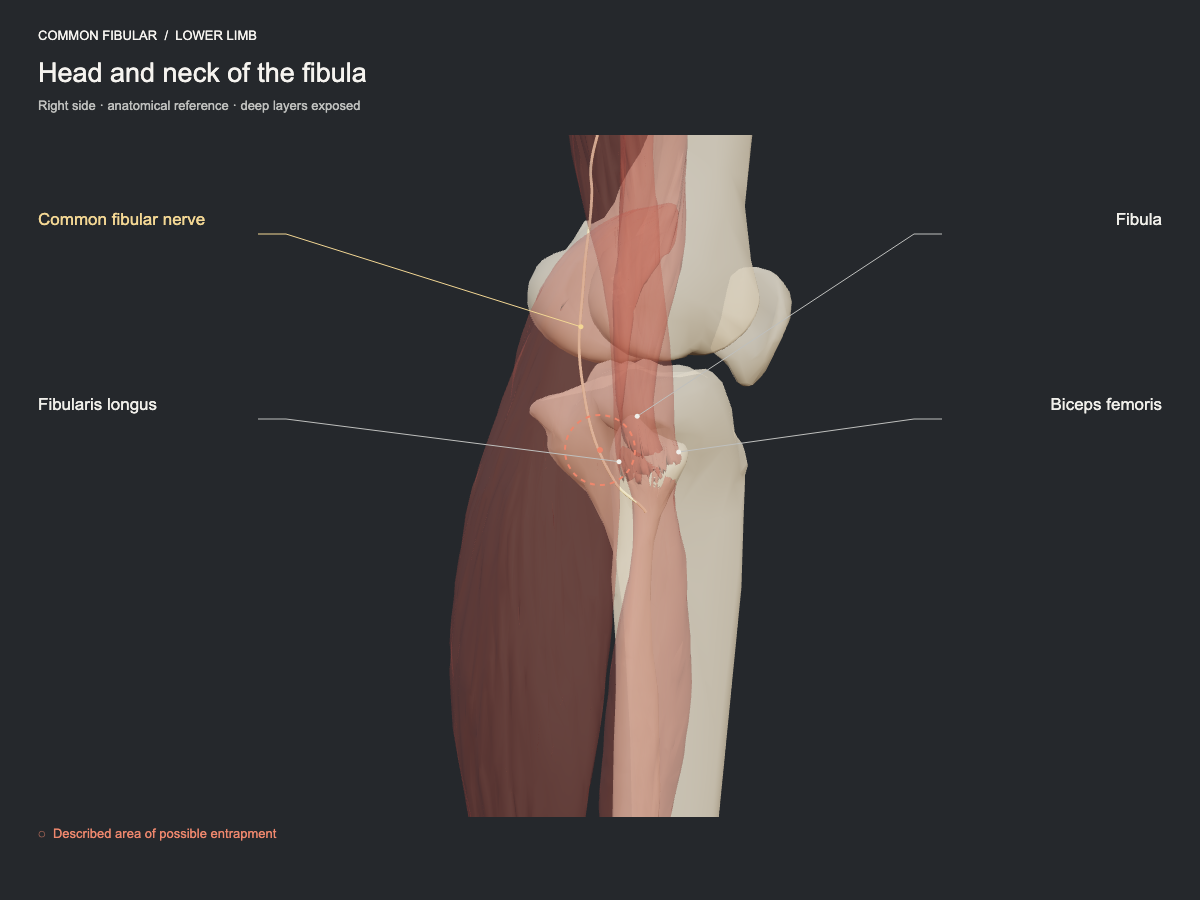
The nerve winds around the fibular neck with little superficial protection and enters beneath fibularis longus. This relationship explains its vulnerability to external pressure, trauma or local lesions, including ganglion cysts. Sufficient involvement may compromise dorsiflexion and eversion of the foot.
- Nerve
- Fibular nerve: fibular neck, ankle and leg
- Frequency
- Common, well-established site for this nerve.
- Type of evidence
- Anatomical and clinical review
References
- Drăghici NC, Văcăraș V, Bolchis R, Bashimov A, Domnița DM, Iluț S, Popa LL, Lupescu TD, Mureșanu DF. Diagnostic Approach to Lower Limb Entrapment Neuropathies: A Narrative Literature Review. Diagnostics (Basel) 2023. PubMed 37958280 · DOI
- Kumar S, Mangi MD, Zadow S, Lim W. Nerve entrapment syndromes of the lower limb: a pictorial review. Insights Imaging 2023. PubMed 37782348 · DOI
Ultrasound landmarks
The nerve winds around the fibular neck, superficial to the bone and deep to fibularis longus, where it divides into deep and superficial branches.
Tests that load this nerve
Other sites of the same nerve
All entrapment sites
Get atlas news
We will write to you when the plans open and when there is new content.